Need help? Call Us Now : +917574022822 | +917575022822

28 Jun, 2024
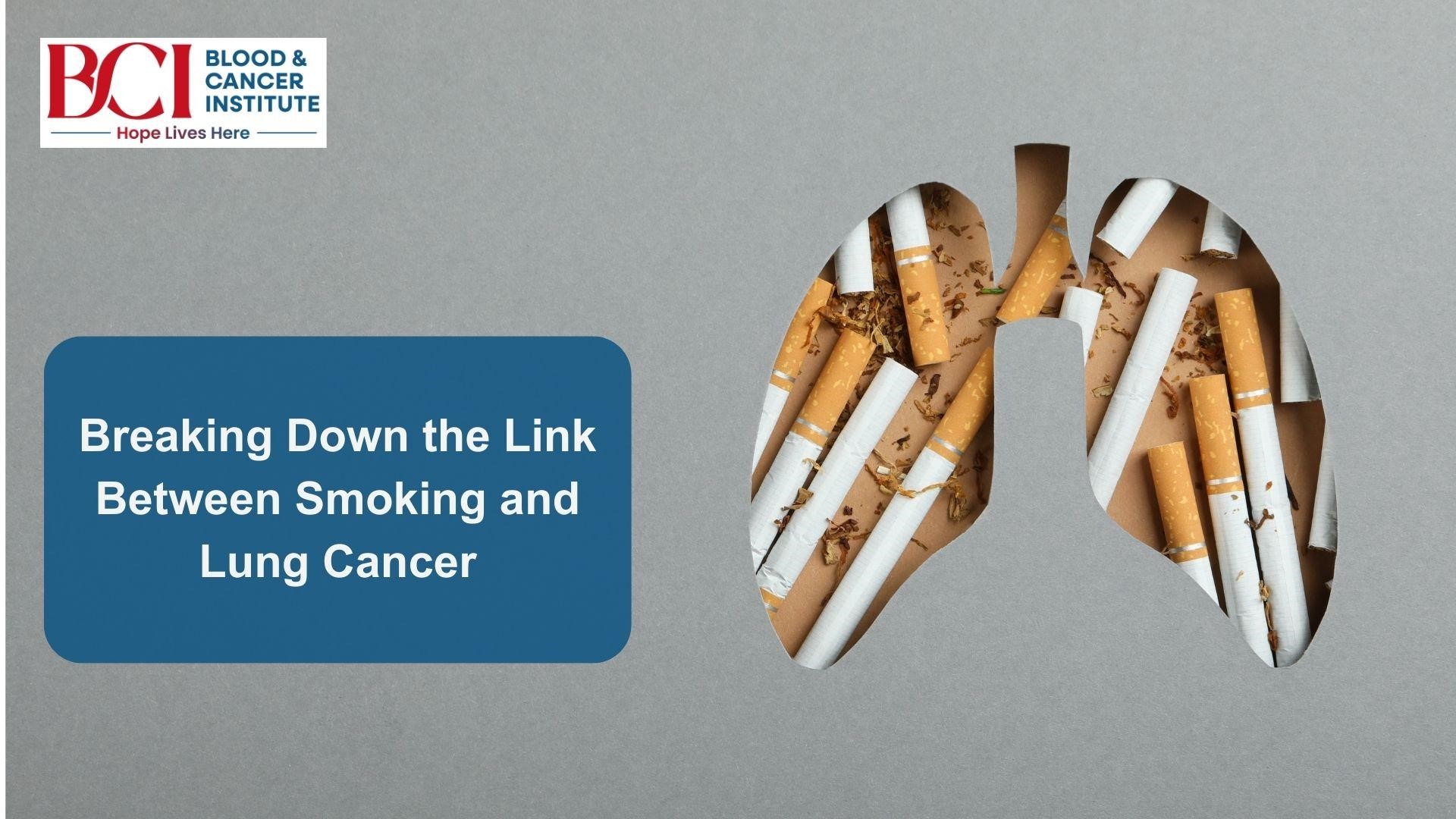
Breaking Down the Link Between Smoking and Lung Cancer
Lung cancer remains one of the most prevalent and deadly forms of cancer in India, claiming numerous lives each year. While various risk factors contribute to its development, the connection between smoking and lung cancer stands out as one of the most well-established and concerning relationships in public health. In this blog, our lung cancer specialists in Surat at BCI- Blood & Cancer Institute have shown the direct correlation between cancer and smoking. Let’s check it out:
The Overwhelming Evidence
Numerous large-scale studies conducted globally have consistently demonstrated the strong link between smoking and an increased risk of developing lung cancer. The evidence from these studies reveals that smokers have a significantly higher risk of lung cancer compared to non-smokers.
Multiple reputable research organizations, including the World Health Organization (WHO) and the Indian Council of Medical Research (ICMR), have reinforced these findings, estimating that smoking accounts for approximately 90% of lung cancer cases in men and 80% in women. Our cancer specialists in Surat have observed that the risk escalates with the duration and intensity of smoking, as well as the age at which an individual started the habit.
The Harmful Compounds in Cigarette Smoke
Cigarette smoke contains a complex mixture of over 7,000 chemicals, many of which are known carcinogens (cancer-causing agents). Two of the most well-known carcinogenic compounds found in cigarette smoke are:
1. Tar: A sticky, solid substance that contains numerous cancer-causing compounds, including polycyclic aromatic hydrocarbons (PAHs) and tobacco-specific nitrosamines (TSNAs).
2. Benzene: A volatile organic compound classified as a human carcinogen by various health organizations, including the International Agency for Research on Cancer (IARC).
These harmful compounds, along with others present in cigarette smoke, can damage DNA and promote the uncontrolled cell growth that characterizes cancer.
The Mechanisms Behind Lung Cancer Development
Experts from Blood and Cancer Institute, giving cancer treatment in Surat explain the link between smoking and lung cancer:
1. DNA damage: The carcinogenic compounds in cigarette smoke can directly damage DNA in lung cells, leading to genetic mutations that promote uncontrolled cell growth and cancer development.
2. Inflammation: Smoking induces chronic inflammation in the lungs, creating an environment conducive to cancer development by producing free radicals and promoting cellular changes.
3. Impaired immune function: Smoking can weaken the immune system’s ability to detect and eliminate abnormal cells, making it easier for cancer cells to proliferate and form tumours.
4. Angiogenesis: Smoking can promote the formation of new blood vessels, which can provide a supply of nutrients and oxygen to support tumour growth.
The Dose-Response Relationship
Studies have consistently demonstrated a dose-response relationship between smoking and lung cancer risk. As our cancer specialist in Surat at BCI — Blood and Cancer Institute says that this means that the more an individual smokes (in terms of number of cigarettes per day and duration of smoking), the higher their risk of developing lung cancer.
Conversely, quitting smoking can significantly reduce this risk over time. Within 5 years of quitting, a former smoker’s risk of lung cancer decreases by approximately 50% compared to a current smoker. After 10 years, the risk continues to decline but may never return to the level of a non-smoker.
Secondhand Smoke: A Hidden Danger
The link between smoking and lung cancer extends beyond active smokers. Secondhand smoke, or the inhalation of smoke from other people’s cigarettes, also increases the risk of lung cancer in non-smokers.
According to the Indian Council of Medical Research (ICMR) and the experts at BCI, one of the best cancer hospitals in Surat, exposure to secondhand smoke is responsible for a significant number of lung cancer deaths among non-smokers in India each year.
Conclusion: Prioritizing Prevention and Cessation Efforts
The overwhelming scientific evidence linking smoking and lung cancer underscores the importance of strong prevention and cessation efforts in India. Our lung cancer specialists in Surat at BCI- Blood and Cancer Institute, suggest that reducing smoking rates through effective public health policies, education campaigns, and accessible cessation resources can significantly impact lung cancer incidence and mortality rates nationwide.
While quitting smoking can be challenging, it is never too late to reap the benefits of a smoke-free lifestyle. Healthcare providers play a crucial role in providing support and resources to help smokers quit successfully, ultimately reducing their risk of lung cancer and other smoking-related diseases.
Additionally, protecting non-smokers from secondhand smoke exposure in public spaces and workplaces is crucial to minimizing the risk of lung cancer and other health consequences.
By addressing the link between smoking and lung cancer through comprehensive prevention and cessation efforts, we can save countless lives and make significant strides in the fight against this deadly disease in India. Empowering individuals with knowledge, resources, and supportive environments can help break the cycle of smoking and its devastating impact on public health.